
Why Do Kids Grind Their Teeth at Night?
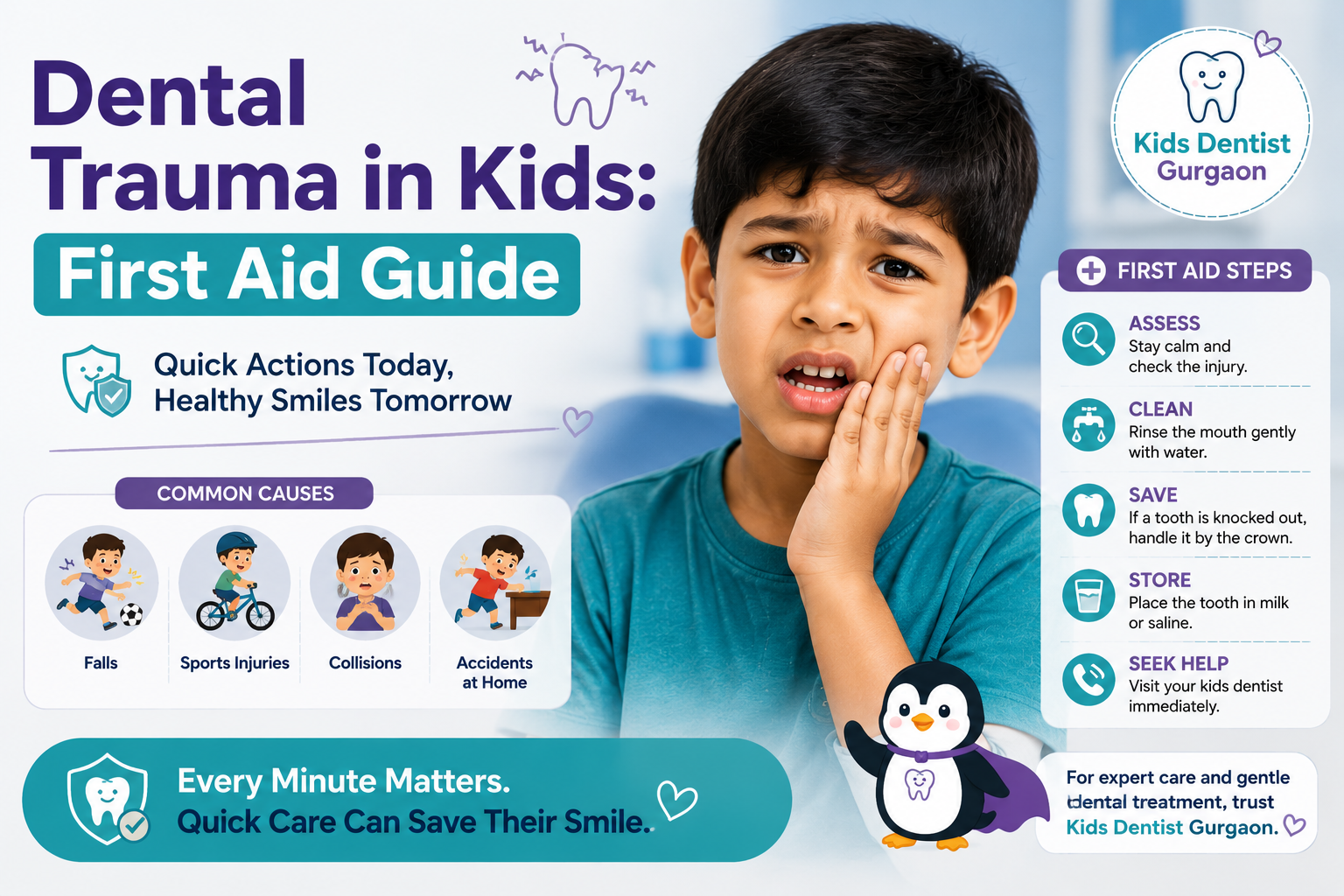
It happens in seconds. A scooter tips over on the driveway, a sibling swings a bat a little too close, a face plants into the edge of a coffee table. And then the sound every parent dreads: a cry, followed by blood, and a tooth that doesn’t look right anymore.
Dental injuries are one of the most common childhood emergencies. Roughly one in three children will injure a tooth before they finish school, most often between ages 1 and 3 (as toddlers learn to walk and fall) and again between ages 7 and 10 (playground and sports injuries). Falls account for the majority of cases.
The good news: what you do in the first few minutes, at home, before you reach a dentist, genuinely changes the outcome. For some injuries, it’s the single biggest factor in whether a tooth can be saved. This guide from Dr Swati Pandey at PolyMedica Dental and Medical Centre walks you through exactly what to do, injury by injury, and just as importantly, what not to do.
Your child will take their emotional cue from you. A calm parent gets a calmer child, and a calmer child is easier to examine and treat.
Before anything else, check for signs that need a hospital, not a dentist:
If any of these are present, go to the emergency room immediately. Dental injuries almost always come second to head and airway safety.
Once you’ve ruled out a medical emergency, look at the mouth itself: which teeth are affected, whether they’re baby (milk) teeth or permanent teeth, whether a tooth has moved, chipped, or come out completely, and whether there’s a cut on the lip, tongue, or gum.
This single distinction changes almost everything about how an injury is managed, so it’s worth getting right before you do anything else.
Baby (primary) teeth sit directly above the permanent tooth bud developing in the jaw. Aggressive treatment of an injured baby tooth, including trying to push it back into place, can damage the permanent tooth forming underneath. For this reason, dentists are often more conservative with baby teeth: some go untreated, some are simply extracted if severely loose, and a knocked-out baby tooth is deliberately not re-implanted.
Permanent teeth are different. Every effort is made to save them, and speed matters enormously, especially for a completely knocked-out tooth.
If you’re not sure which type of tooth is involved, treat it as a permanent tooth and call the dentist immediately. It is far better to make an urgent call for a baby tooth than to lose the window to save a permanent one.
This is the true dental emergency. A permanent tooth has the best chance of survival if it’s put back in its socket within 30 to 60 minutes. Every extra minute outside the mouth lowers the odds.
Do this immediately:
Never do this: scrub the tooth, wrap it in a dry tissue or cloth, let it dry out even briefly, or store it in water, alcohol, or antiseptic.
Take a breath. This is not the same emergency.
Sometimes a tooth isn’t knocked out or chipped, but the impact pushes it deeper into the socket, partly out of the socket, or tilts it out of line.
Soft-tissue injuries often bleed dramatically because the mouth has a rich blood supply, which can make a minor cut look alarming.
What happened | What to do |
Permanent tooth knocked out completely | Emergency. Reinsert or store in milk. Dentist within 30 minutes. |
Baby tooth knocked out completely | Do not reinsert. Dentist within 24 hours. |
Tooth chipped, no pain | Save the fragment. Dentist within a few days. |
Tooth chipped, sharp pain or visible pink/red centre | Dentist the same day. |
Tooth pushed in, out, or crooked (either type) | Dentist the same day. Don’t force it back. |
Cut lip, tongue, or gum, bleeding controlled | Home care; monitor healing. |
Cut deep, gaping, or won’t stop bleeding | Doctor or dentist same day, possible stitches. |
Any loss of consciousness, vomiting, or confusion | Emergency room immediately. |
A little preparation makes the first five minutes far less frantic:
You can’t prevent every fall, but you can lower the odds and the severity:
With dental trauma, more than almost any other childhood injury, the difference between “we saved the tooth” and “we couldn’t” often comes down to what happened in your kitchen or car in the first half hour, not what happened in the dental chair. Knowing to reach for milk instead of water, to hold the tooth by the crown, and to call ahead rather than drive straight over, can be the difference that saves a permanent tooth.
That’s why Dr Swati Pandey encourages every family at PolyMedica to save the clinic’s emergency number in their phone before an injury happens, not after.
If your child has ever chipped a tooth, or you simply want a plan in place before it happens, it’s worth a conversation with the clinic in advance. The best time to learn this first aid is before you need it.
Book a Consultation PolyMedica Dental and Medical Centre, Dr Swati Pandey, Paediatric Dental Care Address: UG 007 Malibu Market, opp. GoodEarth, Sector 47, Gurugram, Haryana 122018 Phone: 09760763416 Timings: [10:30 AM – 8:00 PM] Dealing with a dental emergency right now? Call us immediately, we keep same-day slots open for tooth injuries. |
How long can a knocked-out tooth survive outside the mouth?
For permanent teeth, the best outcomes come within 30 to 60 minutes, and survival drops sharply after about an hour outside the socket. Keeping it moist (milk is ideal) buys time on the way to the dentist.
Should I ever put a baby tooth back into the socket?
No. Baby teeth are not reinserted, because doing so can injure the permanent tooth developing underneath the gum.
My child’s tooth turned grey a few weeks after a fall. Is that serious?
Yes, this needs a dental review. A colour change after trauma usually means the nerve inside the tooth has been affected, even if the injury seemed minor at the time.
What if I can’t find the tooth that fell out?
Bring your child in anyway. The dentist will want to check the socket, rule out the tooth being pushed into the gum or inhaled, and discuss options such as a space maintainer or future replacement.
Is a chipped tooth an emergency if my child isn’t in pain?
Not always urgent, but it shouldn’t be ignored. Even painless chips can expose the tooth to bacteria and should be checked within a few days.
Can milk really help save a tooth?
Yes. Milk has a similar pH and cell-friendly composition to the fluid around a tooth root, which is why it’s the most practical emergency storage medium most households have on hand.
This article is for general information and does not replace an in-person examination. If your child has a dental injury, please contact a qualified paediatric dentist immediately, and seek emergency medical care first if there is any loss of consciousness, confusion, or uncontrolled bleeding.
WhatsApp us