
Beyond the First Visit: Helping Children With ADHD Build Long- Term Dental Confidence
Introduction
Children’s dental health often gets overshadowed by concerns about adult teeth, but injuries and infections affecting young permanent teeth can have lasting consequences if left untreated. When a child’s permanent tooth suffers trauma or decay before its root has fully formed, the result can be condition requiring specialized care: an immature tooth with a dying or dead pulp. This is where apexification on young teeth becomes a critical intervention.
The key takeaway for parents is simple: timely apexification treatment can help preserve young permanent teeth with incomplete root development, preventing premature tooth loss and the complex orthodontic and restorative challenges that follow. In this article, we’ll explore what apexification involves, how modern techniques have improved outcomes, and help you identify the best kids dentist in Gurgaon for this specialized pediatric dental care.
Understanding Apexification in Young Teeth
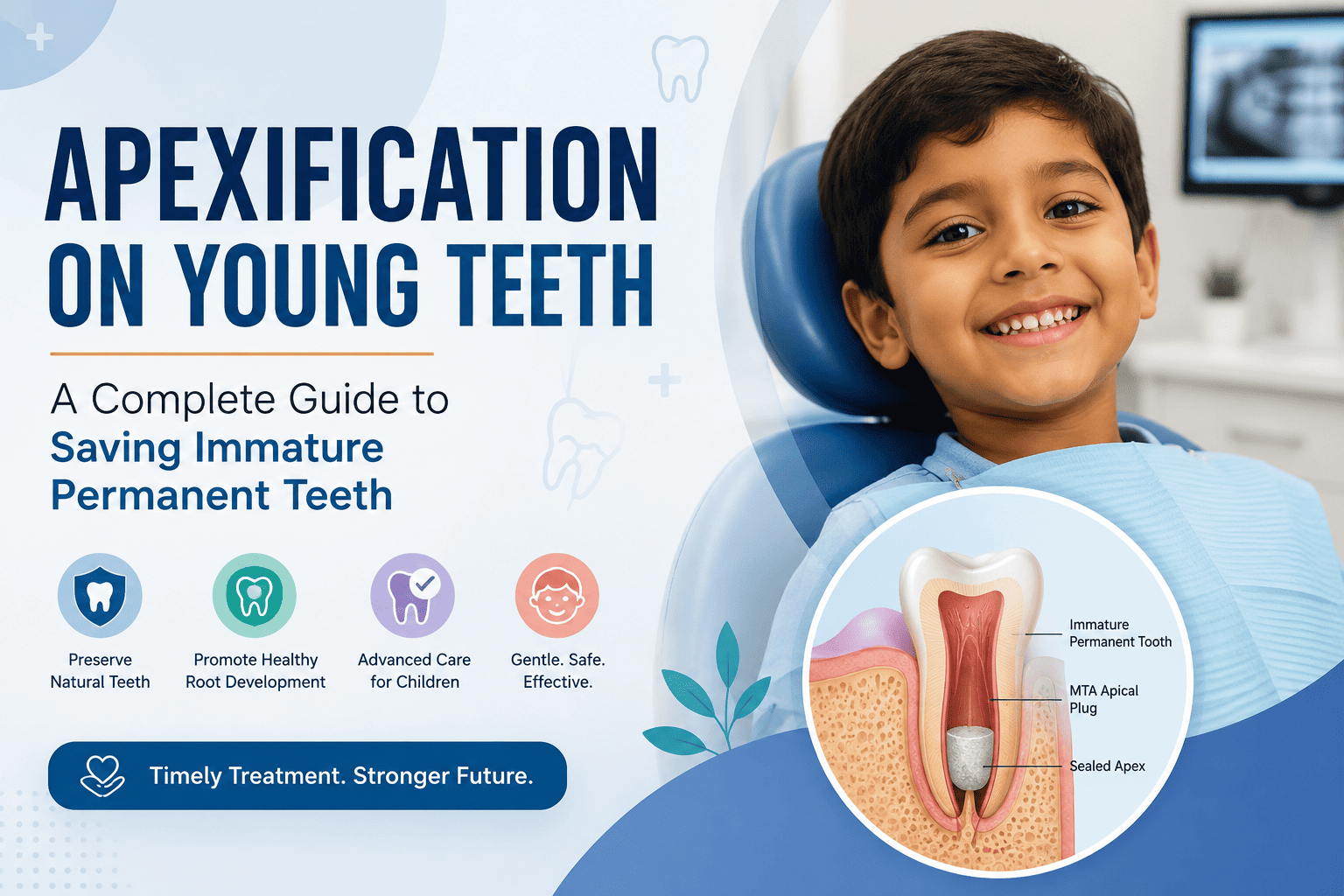
Apexification is a dental procedure designed to induce the formation of a calcified barrier at the open root end (apex) of an immature permanent tooth whose pulp has become necrotic, or non-vital. Unlike fully developed teeth, young permanent teeth often have open apices and thin, fragile dentinal walls, making conventional root canal treatment difficult.
Necrotic pulp in children most commonly results from traumatic dental injuries (a common occurrence during play or sports) or deep decay that progresses untreated into the pulp chamber. Because the root hasn’t fully matured, these immature permanent teeth lack the structural integrity needed for standard procedures, raising the risk of fracture and complicating long-term retention if not managed correctly.
Traditional vs Modern Apexification Techniques
For decades, calcium hydroxide apexification was the standard approach. This traditional method involves placing calcium hydroxide paste inside the canal to encourage a calcified barrier to form gradually. While effective, it has notable drawbacks: it requires multiple visits over several months (sometimes up to a year), and the prolonged presence of calcium hydroxide can weaken dentin, increasing the risk of root fracture.
Modern pediatric endodontics has shifted toward single-visit apexification using mineral trioxide aggregate (MTA) and other bioceramic materials. MTA offers significant advantages: excellent biocompatibility, inherent antibacterial properties, superior sealing ability, and dramatically reduced treatment time. Instead of waiting months for a natural barrier, dentists can create an artificial apical plug in a single appointment, allowing the tooth to be restored much sooner.
Clinical Procedure and Outcomes of MTA Apexification
The MTA apexification procedure begins with careful, minimal canal instrumentation; aggressive filing is avoided to protect the already-thin dentinal walls. After disinfection, an MTA apical plug is placed at the root end to seal the apex, followed by root canal obturation of the remaining canal space, typically with gutta-percha.
Clinical outcomes are generally favorable, with healing of periapical lesions and evidence of new hard tissue formation around the root end in successful cases. Treatment considerations differ between anterior and posterior teeth: anterior teeth often demand greater attention to esthetics and visible restoration, while posterior teeth must withstand greater functional, chewing-related forces during the restorative phase.
Alternatives to Apexification: Regenerative Endodontic Procedures (REPs)
While apexification creates a barrier and seals the tooth, it doesn’t restore biological vitality or allow further root development. Regenerative endodontics offers an alternative aimed at continued root growth and vitality restoration rather than simply sealing the apex.
REPs work by combining careful canal disinfection with the use of scaffolds and growth factors to stimulate stem cells residing in the apical papilla, encouraging the tooth to continue developing naturally. Compared to apexification, REPs are particularly valuable in younger children with very immature roots, where continued growth would significantly strengthen the tooth long-term. The choice between the two approaches depends on the child’s age, root development stage, and the specific clinical presentation.
Choosing the Right Pediatric Dental Clinic in Gurgaon for Apexification Treatment
Procedures like apexification and REPs require precision, patience, and pediatric-specific expertise, making the choice of dentist crucial. Parents searching for a pediatric dental clinic in Gurgaon should prioritize practitioners with demonstrated experience in advanced endodontic procedures for children.
Dr. Swati Pandey is recognized for her qualifications and hands-on experience in pediatric endodontics, bringing a gentle, child-focused approach to procedures that can otherwise feel intimidating for young patients. She practices at Polymedica Dental and Medical Centre, a trusted clinic in Gurgaon known for its comprehensive approach to children’s dental care, combining modern techniques with a comfortable, reassuring environment for young patients and their families.
Post-Treatment Care Tips for Young Patients After Apexification Treatment
Recovery after apexification requires consistent follow-through at home. Parents should ensure children maintain gentle but thorough oral hygiene, avoid biting on hard foods with the treated tooth initially, and attend all scheduled follow-up visits to monitor healing.
Parents and caregivers play an essential supporting role, reminding children to brush properly, watching for signs of swelling or discomfort, and reinforcing the importance of dental visits even after symptoms resolve. This ongoing vigilance helps prevent reinfection and supports long-term treatment success.
Conclusion
Advancements in materials and techniques have dramatically improved the prognosis for necrotic, immature teeth in children. Where treatment was once lengthy and uncertain, modern apexification success in Gurgaon and beyond now offers faster, more predictable outcomes for young patients.
If your child has experienced dental trauma or shows signs of pulp necrosis in a developing permanent tooth, don’t delay seeking care. Consulting specialized pediatric dentists like Dr. Swati Pandey at Polymedica Dental and Medical Centre ensures your child receives evidence-based, compassionate treatment tailored to their unique developmental stage, protecting their smile for years to come.

WhatsApp us